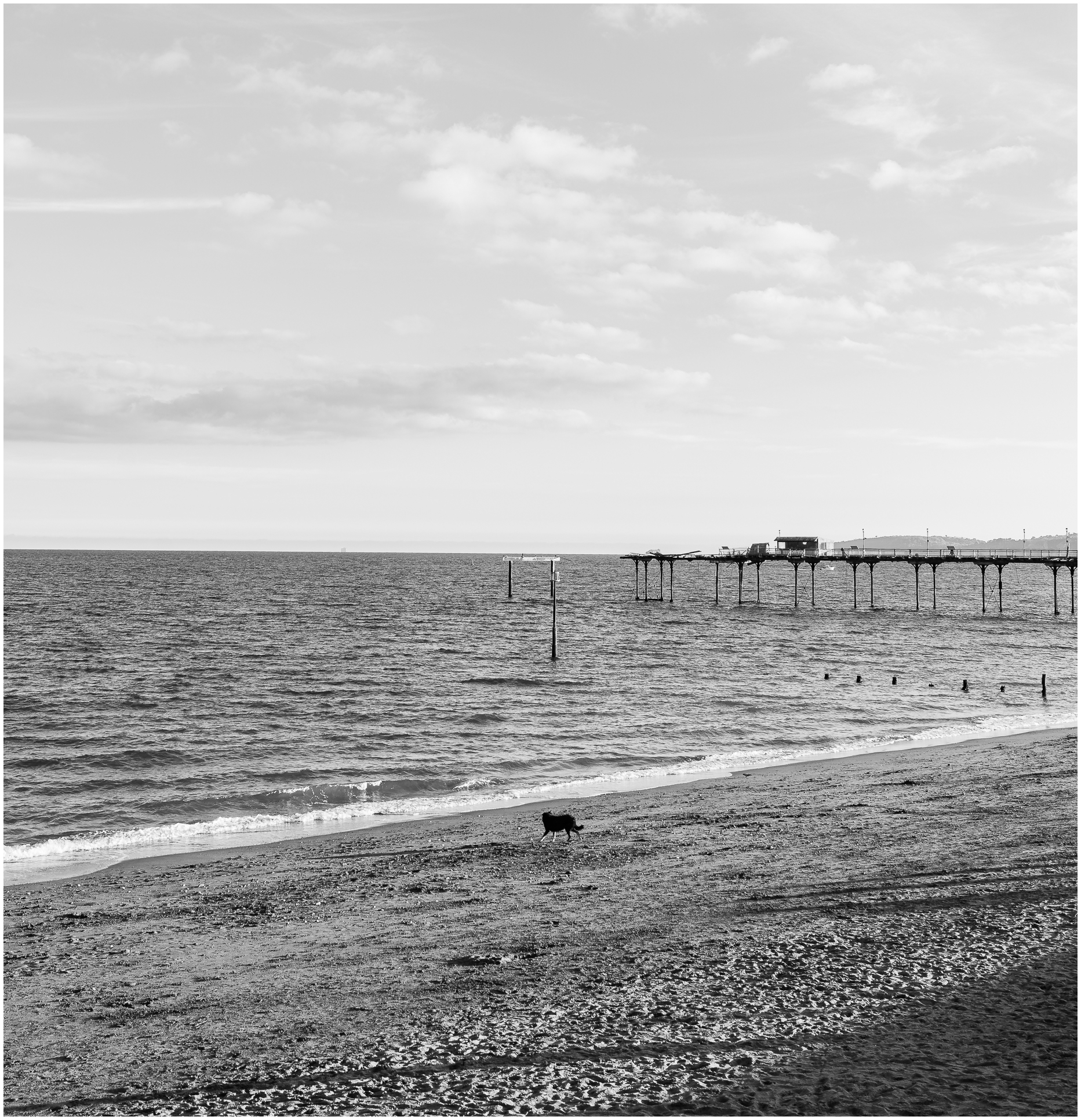
‘The left wing and the right wing belong to the same bird.’ ~ Unknown
culture, 21c
I keep thinking about how the world is defined by emptiness. There seems to be at least two kinds: the first forms a melancholic combination of simulation, decay and meaninglessness (pervasive in a capitalist society); in contrast to Zen Buddhism's concept of the ‘beauty of the blank space’. The latter is closer to something I have experienced when mountain-biking through the woods and resting by the river after intense climbs followed by joyful, speedy descents. A fertile void for exploring deeper dimensions of creativity, it is an emptiness that feels paradoxically full.
The real world exists although politicians repeatedly ignore it. Despite having a clear mandate to fix everything from potholes and the NHS to unfettered migration, they continue to treat the public as a kind of simulation, which is probably why politicians can say stupid things like ‘black Labradors are right-wing’ (and sincerely believe such an idiotic sentiment will resonate with the people rather than make them roll their eyes in exasperation). A mayoral candidate for London, an unabashed Thatcherite in her youth, can claim to represent the working classes with no hint of irony whatsoever (and no doubt be supported by said demographic, such is our extraordinary culture of amnesia).
Breakdancing and the patriarchy: I came away from Raygun’s Netflix documentary feeling more sympathetic than I thought I would, despite her naivety. It never ceases to amaze me how apparently educated people (usually with PhDs) pretend not to understand the real world when it happens. She claimed to be shocked after her silly performance at the Olympics drew so much vitriol. She expressed surprise at the nastiness which left me thinking, what, you mean that thing called the Internet, which, for the last 10-15 years has been nothing but a vile cesspool of intolerance, bile and hate? You thought somehow the rules wouldn’t apply to you! I couldn’t help but note the irony of her mentioning the evils of the patriarchy (as is obligatory for just about every academic). Yet it was one of the patriarchy’s most patriarchal patriarchs of all, Sir Richard Branson, who gave her a lifeline and actually saw something joyful in her performance at the Olympics.
Working in the NHS, I would say about a third of my colleagues are a mix of immigrants and ethnic minorities. All perfectly nice people every bit as professional and capable as my British colleagues (although we do get a few agency staff who just sit and stare at their phones, but then that’s true of a lot of Brits as well!) Still, almost no ethnic minority and/or immigrant I’ve come across correspond to the ‘signs’. Be it expressed through paternalistic condescension in faux-left rags like the Guardian, and just about any art gallery or museum you'll waste your time visiting, or, straightforward suspicion in the right-wing press, the sign is considered more real than the real.
Nobody believes their own hype quite like a British journalist. Similarly, the arts are increasingly colonised by the posh – descendants of the old bourgeoisie and hence enthusiastic to latch onto whatever ‘Current Thing’ gains woke points and changes nothing. When I say the arts and entertainment have become ‘bourgeois’, I am referring to an inert culture increasingly centred on shouty discourses, judgement, competitiveness and the Machiavellian – from the all-pervasiveness of 24/7 news, generic influencers, podcasts, sport and talent shows (cooking, singing, painting and glass blowing etc., etc., etc. and etc.) to Game of Thrones, Marvel, DC and The Traitors: celebrations of being an insufferable know-it-all, judgement, winning and screwing people over. You don’t see much coming from, say, an anarchistic perspective nor left-wing principles of solidarity. Instead, we get the ‘progressive-left’, an unimaginative bourgeoisie who have landed upon a commodified activism (commonly referred to as ‘woke') which, by way of its predictable tropes through vapid and one-dimensional characters and storytelling, does little more than annoy rage-bait ‘journalists’ of Spiked and the Telegraph variety. The ultra-conformist capitalist spectacle rolls on unabated amid an empire of slop and sameness (tech utopianism: a myth upheld through the misery and exploitation of invisible workers – Žižek’s ‘Squashed dead birds of progress’). Diversity remains an illusion. In fact, I would go as far as to say that we are witnessing an inversion of the arts: a culture of intolerance and illiberalism mirroring the Right to create a symbiosis rather than a resistance. Much like a journalist smugly believing his own hype, the arts and entertainment likewise do not stand opposed to an inherently violent and destructive system.
Lyotard defined the postmodern condition as an ‘incredulity towards metanarratives’, or universal stories. Putting aside ongoing clashes between certain religions, which suggest such narratives persist in the human psyche, I believe (similar to emptiness) to be at least two metanarratives that endure in our fragmented world. The first, I look to the trees: there is something ancient and universal about their significance. The second relates to the capitalist system we live in: contrary to those pathologically happy morons you see in adverts (man’s most obnoxious of creations!), capitalism’s enduring product (or story) is despair. iPhones and social media are the evolution of an alienating spectacle: ‘separation perfected’ par excellence; people have never been so unified in isolation – from the world as much as from themselves.
In a society where thoughts – almost certainly never arrived at independently – are siloed, commodified and sold back to us, is it possible to create a universal sign that decolonises the mind? This is one reason why I prefer to think of myself as a writer rather than an artist: ‘art’ comes with too many assumptions attached, most of them negative though not wholly undeserved (and it only has itself to blame!). dub spectrum was developed with the intention of reconnecting with a DIY ethos lost in 21c's linear society, which appears to have given rise to an increasingly literalistic culture as detrimental to truth as it is to art and the imagination. Add to that the arts mirroring the intolerance of the Right, a return to indie is imperative.
2026
© Christopher Sharp