about

‘If the doors of perception were cleansed every thing would appear to man as it is, Infinite.’ ~ William Blake

dub: a copy of.
spectrum: the entire range.

return to the fields

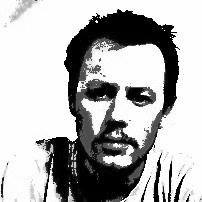
a bit about my journey…

I grew up in a council house in the village of Christow, east Dartmoor, overlooking a beautiful valley we simply referred to as the fields where we would spend many an hour building tree houses, attempting ninja moves, swimming in rivers and exploring the terrain free as birds.  The fields seemed a world apart from the village, with all its snobbery and rules, and in many ways to us harboured mysteries akin to ancient myths and folklore.  I was creative as a child; I particularly enjoyed drawing cartoons and was very good at theatre.  My parents also like to remind me about the time I ‘Jackson Pollocked’ their bedroom with mum’s nail varnish!  The village was largely middle class and well-to-do but there was a minority assortment of low-earning ‘riff-raff’, which I suppose my family fell into (and probably why my accent confuses a lot of people because I don’t sound like a Devonshire dumpling who says ‘ooh-arr’). Dad was a jobbing builder and mum worked mostly as a school secretary around other jobs cleaning and babysitting.  It was Thatcher’s ’80s so tough times for those in the low-income bracket living in rural areas but, although my parents struggled a lot financially (divorcing when I was quite young), Dartmoor was an amazing place to have spent a childhood.  The wonderful feeling of freedom amid nature experienced by my brother, friends and I remain, I think, the single biggest influence behind my work.

I was an anxious and rebellious indie-kid coming of age in the ’90s via underachieving at a small-town comprehensive (beaten up and kicked out of home, aged 16, during my GCSEs but that’s another story!) and working various part-time jobs to earn money that was mostly spent on t-shirts, weed and cassettes.  Early on it was all things indie and grunge – from Senseless Things, Ride, the Cure, Nirvana and L7 (and outrageous shows like The Word) to the dub and spaced-out electronica of Mad Professor, Dub Warriors and the Orb.  I remember discovering the golden era of hip hop from A Tribe Called Quest and the Beastie Boys to Public Enemy and the punkish gangtsa rap from groups like NWA.  It was BMX, skateboards, Super Nes and Street Fighter 2 in an era of Strictly Jungle and the Edge mixtapes, late night cruising country back roads of Devon (usually to a free party), high as kites and trippin’ on shrooms, bopping to the drum n bass riddims of Hype, Nicky Blackmarket, Micky Finn, Darren Jay and more!  Most of all, I’ll never forget the first time I heard Demon’s Theme on LTJ Bukem’s Logical Progression compilation; it blew my mind and got me into DJing!  There was Bristol’s trip hop and d’n’b scene from Massive Attack to Roni Size’s Full Cycle Records.  There was the time we got loved-up to see Leftfield’s Paul Daley do a set at Plymouth Warehouse (with Fabio playing jazzy drum n bass in the back room) and my first crowd surf was at a Prodigy gig on speed.  We had music with energy, diversity and spirit that made it genuinely exciting to be young.

An itinerant teen on benefits, via Kingsteignton, Ogwell and Newton Abbot, I moved to Exeter (into various house shares) to attend college where I encountered the barminess of Brit Art while visiting the now infamous Sensation exhibition at the Saatchi Gallery.  I recall being particularly drawn to the paintings of Chris Ofili and Fiona Rae.  It was around this time that I realised the dream was to be an artist (specifically an abstract painter).  The creative culture of the ’90s – in all its pioneering, self-sufficient optimism, eccentricity and romance – spoke to that rebellious teenager inside who, through youthful naivety, believed the 21st century would play host to an even greater spirit of indie!

After college I lived rent-free in a village pub in Doddiscombsleigh while working in the bar and kitchen, deferred a place at uni, saved some money and travelled Australia and New Zealand.  I attained a bachelor’s from the Nottingham Trent University and later got my MA at Central Saint Martins, London (also making various trips around Europe whenever I could, visiting numerous galleries and museums).  The former I spent most of my time in record shops, spinning a mixture of dub and intelligent drum n bass on Nottingham’s Fly FM and various bars and clubs, disinterested in my arty-farty contemporaries promulgating postmodernism’s arid worldview.  I had lots of fun working part-time in a small bistro run by an old rocker and in my second year I undertook a collaborative project with Nottingham’s Royal Society for the Blind, which got me short-listed for an Ambassadorial Scholarship.  At the time I was hoping to study a master’s in California, but sadly it wasn’t meant to be.  Yet still I dreamed and ultimately headed to London where I discovered that an idealistic council house boy from Dartmoor would come to find the art scene, in such a cosmopolitan city that had been so creatively vibrant only a decade earlier, boringly fauxhemian (the result of too much gentrification, maybe).  I found it all a bit sterile and institutionalised. The Big Smoke excited me no end during my late teens and early twenties but, after seeing more of the world before eventually moving there, it felt like living in a giant shopping mall rather than a global city with any kind of artistic or cultural vibe.

My time in Nottingham saw two wars of questionable legality and I fell increasingly into disillusionment – as much with the apathy of largely privileged university students as society in general. After London came the financial crash, which only compounded my anger and despair towards the world. Art seemed indulgent, impotent and pointless… I realised I needed space and quietude not found in London.

The ensuing experimental, melancholic and disenchanted years embodied a process of ‘unlearning’ after graduating from university, which eventually led to a return to my roots. I ran a couple of studios in Exeter that I mostly supported through an assortment of jobs including night shifts in a care home for adults with autism and learning disabilities to working for mental health home treatment teams and teaching English at a language school.  The single-minded determination to be an abstract painter gradually evolved into working with the figure (with a particular interest in Matisse) leading to a specific interest in landscapes after reading a lot of Eastern philosophy and the work of Jung. I took part in solo and group exhibitions in both the UK and abroad. However, I found the creative process itself is what intrigues me: gallery shows seemed rather dull, so I eventually ended up situating work in different locations – be it cities from Plymouth, Bristol, London and Paris to rural areas around Devon. Painting would eventually fade into the background as writing became the primary focus of my creative endeavours, culminating in my first novel written in various cafes, followed by a two-month road trip through Morocco, Spain and Portugal. I then wrote my first book of poetry while living on Dartmoor, mountain-biking through its glorious woodland, before moving again.

I became fascinated with the folk tradition and coastal landscapes of Cornwall after moving from Dunsford to Falmouth in 2020 to study boatbuilding. No idea why I wanted to pursue this – I’ve sailed maybe a handful of times in my life! I think I was drawn to boats as an object and liked the idea of working with them sculpturally. I quickly discovered I’m no mariner and switched to studying a personal training qualification, simultaneously working a mixture of jobs in cafes, pubs, psychiatric wards and a homeless hostel.  I completed the course despite fracturing my ankle after taking up surf-skating, which was shortly followed by the death of my grandfather (amid the lockdown insanity).  On my fourth attempt, I passed my driving test in Camborne. I then headed back east to Devon, relocating to Exmouth, where I attained an exercise referral qualification while working as an Activities Coordinator for a mental health charity before going to work for the NHS at a crisis house helping people experiencing psychological distress.  I also began writing a new novel largely inspired by Homer’s Odyssey and fairy tales of the Brothers Grimm.  It’s still in the early stages, but I may post some extracts in due course as it develops.

All the above, coupled with my love of underground dance music, helped coin the term dub spectrum, which is a creative ethos primarily focusing on writing and lens-based media. It embraces self-sufficiency, influenced by the DIY approach of underground music movements, which sees creativity as a counterbalance to the cold and corporatised rationalism that seems to be driving the entire world mad. After hitting a low point personally, I began taking long walks through the woodland areas in the valley I grew up, which inspired my first book of poetry, The Cycle Diaries, and is a significant feature in my debut novel Adrift in Amnesia. This developed into combining photography and poetry built upon a combination of Kandinsky’s ideas of the spiritual in art and Eastern philosophy.

After getting evicted from Exmouth, due to a money-grabbing landlord wanting to develop his property into luxury flats, I spent some time living in the small village of Tedburn St. Mary on the edge of Dartmoor close to some of my favourite woodland. Through photography, I realised a connection to trees and the river and have developed an interest in how the landscape, amid various seasons, symbolises different states of being. I integrate photography, situational note taking and walking in nature to create poetical spaces. The form orientates from an embodied, transient experience alongside the interrelation between a poem’s rhythmic use of words to create imagery and compositional techniques in landscape photography: both expressing ways of seeing beyond time. I write various works under the pseudonym Percival Alexander. Here, I tend to explore themes of existential despair and transformation in an absurd world. This started out as incorporating short written pieces into paintings on plasterboard (drawing inspiration from the literary style of Nietzsche’s Thus Spake Zarathustra and Oscar Wilde’s prose poems), which gradually evolved into longer reads. December ’25, I moved from Tedburn to Teignmouth where the valley I grew up meets the sea, I have a view of distant clouds beyond its horizon and can feel the sand beneath my feet (I also intend to take up surfing!). All the while dub spectrum continues to evolve, but I would say it largely centres around the tension between Blake’s innocence and experience… a new journey begins with a return to the fields.

2026

dub spectrum

contact: unityofkana(at)gmail.com